The Trendelenburg position is widely used in operating rooms when a procedure requires the patient's head to be positioned lower than the feet. Although it may look like a simple adjustment of the operating table, the position can affect breathing, circulation, pressure distribution, and the surgical team's access to the operative site. Understanding when and how it is used helps clinical teams plan positioning more carefully and helps hospital procurement teams evaluate the equipment needed for different procedures.
This guide explains what the Trendelenburg position is, why it is used, how it differs from reverse Trendelenburg, and what healthcare professionals should consider when positioning a patient. It also outlines the role of modern operating tables and positioning accessories in supporting controlled, stable positioning.
What Is the Trendelenburg Position?
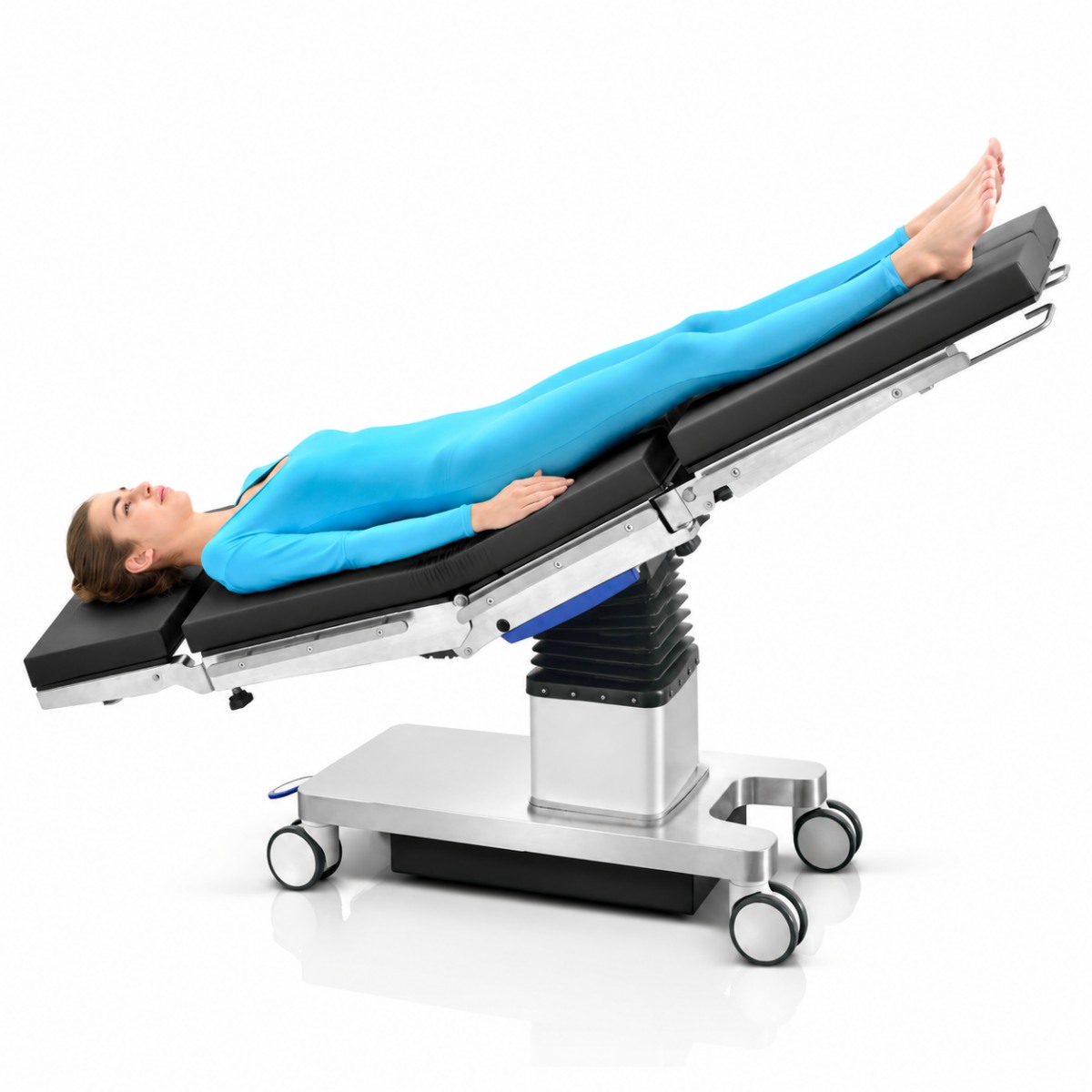
The Trendelenburg position is a variation of the supine position in which the patient lies on their back while the operating table is tilted so that the head is lower than the feet. The angle is selected by the clinical team according to the procedure, the patient's condition, and the requirements of the surgical approach.
It is commonly associated with laparoscopic and pelvic procedures, where tilting the body can help abdominal organs move away from the operative area under gravity. However, the position is not suitable for every patient or every procedure. Its potential benefits must be balanced against respiratory, cardiovascular, ocular, and positioning-related risks.
In an operating room, Trendelenburg is usually achieved through the table's powered tilt function rather than by placing extra support under the patient's body. The table must provide an appropriate positioning range and a stable platform, while the team ensures that the patient remains secure throughout the procedure.
Why Is the Trendelenburg Position Used in Surgery?
1. To Improve Surgical Access
One reason for using Trendelenburg is to improve access to the pelvis and lower abdominal cavity. In selected laparoscopic procedures, a head-down tilt can allow the abdominal contents to shift away from the surgical field, giving the surgeon a clearer working area.
The position is commonly considered in some gynecological and urological procedures and in selected lower abdominal operations. The required tilt depends on the procedure, the patient's anatomy, the surgical technique, and the team's assessment. A steeper angle is not automatically better; the aim is to achieve adequate exposure while limiting unnecessary physiological stress.
2. To Support the Planned Surgical Approach
Patient positioning is part of surgical planning, not simply a last-minute adjustment. The surgeon, anesthesiologist, and operating room team consider the intended access route, equipment layout, airway management, and duration of the procedure before choosing a position.
For example, a minimally invasive pelvic procedure may require a different tilt from an operation performed through an open abdominal incision. The table's range of movement, the need for imaging, and the placement of other operating room equipment can all influence the final setup.
3. To Maintain a Stable Position During the Procedure
When the table is tilted, gravity can cause the patient to slide toward the head end or shift against the supports. This creates a need for suitable positioning aids, careful padding, and checks of the patient's alignment. The selected support system must be compatible with the procedure and used according to the device manufacturer's instructions.
Hospitals sourcing operating tables should assess the table's available tilt movements, safe working load, patient-securement options, tabletop design, and compatibility with required accessories rather than relying on the maximum tilt angle alone.
Trendelenburg vs. Reverse Trendelenburg: What Is the Difference?
Reverse Trendelenburg Position
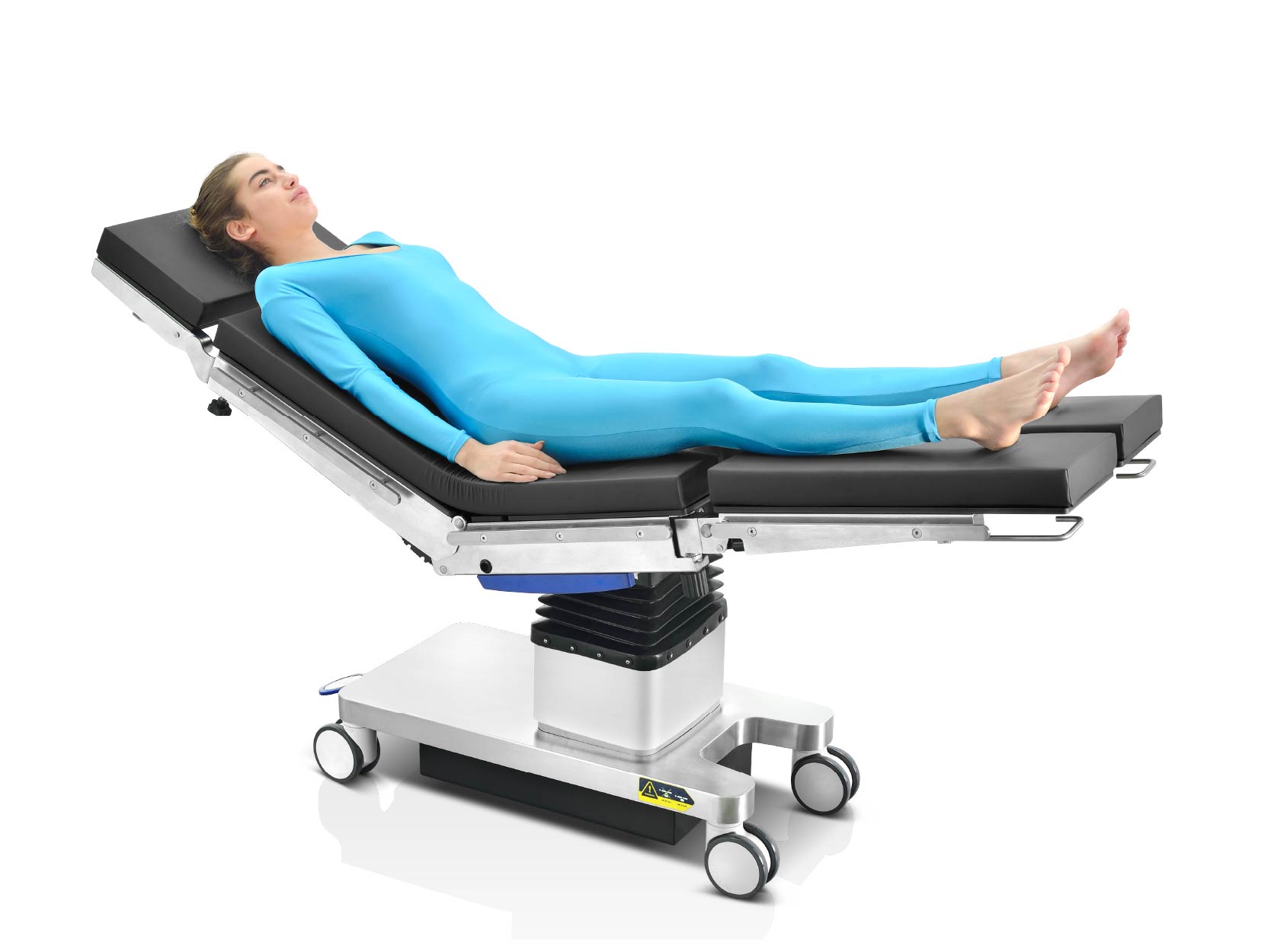
The two positions are essentially opposite table inclinations. The correct choice depends on the operative site and the patient's clinical needs.
| Comparison | Trendelenburg | Reverse Trendelenburg |
|---|---|---|
| Table orientation | Head lower than feet | Head higher than feet |
| Typical surgical consideration | Selected pelvic and lower abdominal procedures | Selected upper abdominal and head-and-neck procedures |
| Potential physiological concern | Respiratory mechanics, venous pressure, facial or airway swelling | Reduced venous return and possible hypotension |
| Main planning priority | Secure positioning and monitoring during head-down tilt | Hemodynamic monitoring and prevention of sliding |
These are general distinctions rather than instructions for choosing a position. The surgical and anesthesia teams should determine the appropriate position for each patient and procedure.
How Does Trendelenburg Affect the Body?
Tilting the body head-down changes the distribution of blood and the relationship between the abdominal organs and the diaphragm. These changes may be clinically significant, especially when the position is steep or maintained for a prolonged period.
- Respiratory effects: Abdominal contents can move toward the diaphragm, reducing lung volume and respiratory compliance. Ventilation may become more challenging in some patients.
- Circulatory effects: Head-down tilt can alter venous return and cardiovascular loading. The response varies according to the patient's condition and anesthetic management.
- Eye and facial effects: Prolonged positioning, particularly at steep angles, may increase intraocular pressure and contribute to facial, tongue, or airway swelling.
- Pressure and nerve risks: Poorly distributed pressure, sliding, or excessive force from supports may contribute to skin injury, nerve compression, or stretch injury.
Patients with significant respiratory or cardiovascular disease, elevated intraocular pressure, obesity, or other relevant risk factors may require additional assessment. These factors do not translate into one universal rule for every case; the clinical team must evaluate the individual patient and the anticipated duration and degree of tilt.
Trendelenburg should not be used simply as a routine method to improve circulation in critically ill patients. Evidence-based guidance highlights that head-down positioning can adversely affect respiratory mechanics and hemodynamics in some critically ill populations. Its use should be based on a clear clinical indication.
Patient Positioning Safety Checklist
Safe positioning involves more than setting the desired table angle. Before and during a procedure, the team should follow institutional policies and applicable professional guidance.
- Assess the patient: Consider body size, mobility, medical history, skin condition, respiratory status, and other factors that may increase positioning risk.
- Confirm table compatibility: Verify the operating table's rated load, tilt range, locking and movement functions, and any restrictions in its instructions for use.
- Plan patient securement: Use appropriate positioning devices and padding to reduce sliding without creating excessive pressure on the shoulders, nerves, or other vulnerable areas.
- Protect the airway and access points: Check that the airway, intravenous lines, monitoring cables, and other connections remain accessible and are not pulled or compressed during movement.
- Recheck after tilting: Confirm alignment, support placement, pressure points, and equipment clearance after the table reaches the intended position.
- Monitor throughout the procedure: Observe the patient and reassess positioning when the procedure, table angle, or clinical condition changes.
Shoulder braces or other supports should not be selected or applied casually. Improper placement can create pressure or stretch on the brachial plexus. The positioning method should follow current clinical guidance, the device's instructions, and local protocols.
Hospitals and distributors can review available patient positioning accessories when planning an operating room equipment package. Compatibility, intended use, cleaning requirements, and the manufacturer's instructions should be confirmed before procurement.
What Should Hospitals Consider When Choosing an Operating Table?
For hospitals, medical equipment distributors, and project contractors, Trendelenburg capability is one part of a wider operating table specification. A table may offer a broad range of movements, but the practical value depends on whether those movements suit the procedures performed at the facility.
- Positioning range: Confirm Trendelenburg and reverse Trendelenburg ranges in the technical specifications, along with lateral tilt and other required movements.
- Patient capacity: Check the rated safe working load and any limitations that apply to particular movements or accessories.
- Imaging requirements: For procedures using C-arm imaging, assess tabletop radiolucency and imaging access.
- Accessory compatibility: Verify that supports, restraints, headrests, and other accessories are suitable for the table model and intended procedure.
- Operation and maintenance: Review control options, emergency operation procedures, cleaning requirements, spare parts, warranty terms, and service support.
- Project requirements: For new operating rooms, coordinate the table with surgical lights, ceiling supply units, room layout, and other equipment to avoid access or movement conflicts.
VG Medical supplies operating room equipment including surgical tables, surgical lights, ceiling supply units, and integrated OR solutions. Buyers planning a new room or upgrading an existing one can compare the available surgical lighting systems alongside table specifications to support a coordinated equipment plan.
Frequently Asked Questions About the Trendelenburg Position
What is the Trendelenburg position used for?
It is used in selected surgical procedures to place the patient's head below the feet. In some pelvic and lower abdominal operations, gravity helps move abdominal contents away from the operative field. The decision depends on the procedure and the patient's clinical condition.
What is the difference between Trendelenburg and reverse Trendelenburg?
In Trendelenburg, the head is lower than the feet. In reverse Trendelenburg, the head is higher than the feet. The positions are used for different surgical and clinical purposes and can produce different respiratory and circulatory effects.
Is the Trendelenburg position safe for every patient?
No. The position can affect breathing, circulation, eye pressure, and tissue pressure. The clinical team should assess patient-specific risks, select the necessary angle, and monitor the patient according to current guidelines and institutional protocols.
How long can a patient remain in the Trendelenburg position?
There is no single duration that is appropriate for every patient or procedure. Risk depends on the degree of tilt, procedure length, underlying health conditions, and other factors. The team should use the minimum positioning required for the procedure and reassess the patient throughout.
What operating table features are important for Trendelenburg positioning?
Important considerations include the specified tilt range, safe working load, stability, patient-securement options, compatible positioning accessories, and ease of controlled adjustment. Hospitals should verify each feature against the manufacturer's technical documentation and the needs of their surgical specialties.
Does Trendelenburg improve blood pressure in all patients?
No. Although the position can temporarily change venous return, it is not a universal treatment for low blood pressure or poor circulation. Its physiological effects vary, and it may be harmful in some patients. Clinical decisions should be made by qualified healthcare professionals.
References
- Speth J. Guidelines in Practice: Positioning the Patient. AORN Journal. 2023;117(6):384–390.
- Armstrong M, Moore RA. Anatomy, Patient Positioning. StatPearls [Internet]. StatPearls Publishing.
- Burlingame BL. Guideline Implementation: Positioning the Patient. AORN Journal. 2017;106(3):227–237.
- Lopes CMM, Galvão CM. Surgical positioning: evidence for nursing care. Revista Latino-Americana de Enfermagem. 2010;18(2):287–294.
- Reinforcement of positioning precautions and respiratory considerations: S2e guideline on positioning and early mobilisation in prophylaxis or therapy of pulmonary disorders. GMS German Medical Science. 2015.
Medical disclaimer: This article is intended for general educational and medical equipment planning purposes. It does not replace clinical judgment, professional positioning guidelines, or the instructions for use supplied with a medical device.