Hydrostatic pressure resistance tester

The hydrostatic pressure tester is suitable for measuring the water permeability performance of various fabrics and non-woven products that have been waterproofed, such as canvas, geotechnical materials, tent cloth and other materials. It is also called the fabric hydrostatic pressure tester and fabric water permeability. Tester, hydrostatic pressure tester, hydrostatic pressure testing machine, etc.

One. How to use the hydrostatic pressure tester:

When using a hydrostatic pressure tester for testing, please follow the instructions for use and fully understand the test methods, standards and requirements in order to conduct the test correctly.

1. Inject about 1200ml distilled water into the water tank of the test device.

2. Adjust the movable feet of the test device to keep the platform of the test device level.

3. Insert the pressure sensor, water level control, and electromagnetic pump plug of the test device into the socket behind the controller.

4. First insert the three-core plug of the power cord into the power socket on the rear panel of the controller, and then connect the power plug to the 220V power supply.

5. Turn on the power switch, turn on the power, and the "Ready" indicator light will light up.

6. Rate selection: The boost rate can be selected according to standards or customized settings.

7. Turn the rotating handle of the test device left to make the triangular cover of the cloth rise. After leveling the sample, turn the handle right to lower the triangular cover of the cloth and clamp the cloth sample.

8. Close the water drain valve on the test device.

9. Press the [Start] button, the "Work" indicator light turns on, and when the sample and the test hole are sealed, the test hole gradually builds up water pressure, and the hydrostatic pressure on the sample is displayed by the digital tube.

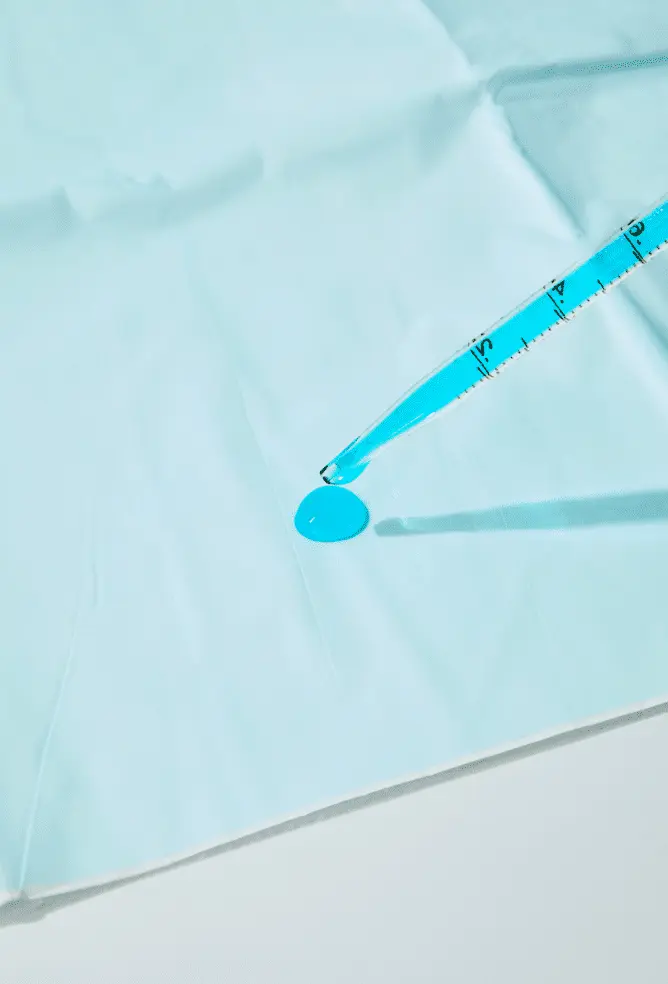
10. The ISO 811 assessment method stipulates that when the third water droplet appears on the sample, press the [Stop] button, the instrument returns to the "ready" state, the digital tube display value is latched, and the latched display value That is the test result.

11. Record the test results and open the water valve. The distilled water in the test hole is returned to the water tank.

12. Press the [Reset] button to release the latched display value and reset the instrument program.

13. Remove the sample and proceed to the next test.

Two. Precautions when using the hydrostatic pressure tester:

1. When conducting tests under general atmospheric conditions, excessive changes in temperature and humidity of the test site should be avoided.

2. The test water must be distilled water and replaced frequently.

3. When the instrument is working by pressing the [Start] button, in addition to stopping the test, the [Stop] button cannot be pressed during the test, otherwise the test must be restarted.

4. During the test, in order to eliminate the air in the test hole, the water is in direct contact with the cloth. Before the test, fill the test hole with water (close the drain valve and press the [Start] button. After the test hole is filled with water, press [Stop] button, press the [Reset] button) and then put in the cloth sample for testing.

5. The standard points out that the results obtained at different rates may be different, so which rate is selected should be stated in the test report. It is recommended that when the water pressure resistance of the cloth sample is low, the 10cmH20 speed speed should be used. When the water pressure resistance is high, the 60 cmH20 speed speed should be used. If you do not know the water pressure resistance of the cloth sample, you can use the 100 cmH20 speed speed for a preliminary test first, and then use it after understanding the water pressure resistance value of the cloth sample. Test at standard rate.

6. If the instrument is not used for a long period of time, the water in the water tank must be drained, use a metal object (such as a screwdriver) to short-circuit the water level electrode and the water tank shell, and turn on the instrument to allow the pressure to flow for 10 seconds to drain out the water.

7. When the pressed operation key is valid, you will hear a "beep" response sound. Otherwise, the keys are invalid (when operated out of sequence).

8. When the water level is lower than the electrode level: the buzzer will make a long beep sound until water is added to a sufficient level. At this time, all keys are invalid. (protect electromagnetic pump)

9. When the water pressure reaches the maximum value: the buzzer will sound "beep...beep" and end after a few seconds. At this time, the instrument is in the [Stop] state.

10. During the test, if you hear a rapid "beep, beep..." sound from the buzzer, the test process will be automatically terminated. It means that the water is not released enough, and the automatic tare is too much, causing the sensor to exceed the range. (protect sensor)


Email: hello@utstesters.com

Direct: + 86 152 6060 5085

Tel: +86-596-7686689

Web: www.utstesters.com

Top

Sciway Marks Fourth Year of Sponsorship for North American Chinese Clinical Chemists Association (NACCCA)

Shanghai Sciway Scientific, Ltd, a leading provider of high-quality laboratory nitrogen generators, is proud to announce its ongoing support for the North American Chinese Clinical Chemists Association (NACCCA) as it enters its fourth year of sponsorship in 2024.

NACCCA is a US-based non-profit international organization that serves clinical professionals, including clinical scientists, physicians, and clinical laboratorians, from a wide range of countries, including the United States, Canada, China, and various Asian and non-Asian countries. The organization plays a crucial role in facilitating collaboration and knowledge sharing among its members to enhance the practice of clinical laboratory medicine. The mission of NACCCA is to promote excellence in clinical laboratory medicine by focusing on education and information exchange.

As a nitrogen generator manufacturer, Sciway's unwavering commitment to NACCCA aligns with its mission to promote excellence in clinical laboratory medicine. The company's sponsorship plays a role in supporting NACCCA's initiatives that focus on education and information exchange, which are essential for the advancement of clinical laboratory practices.

NACCCA's mission resonates with Shanghai Sciway Scientific, Ltd's core values, as both entities strive to empower clinical professionals with the knowledge and tools necessary. The sponsorship will contribute to various NACCCA programs, which are designed to keep clinical professionals at the forefront of their field.

Top

Poclight AT ADLM 2024

The 76th Annual Meeting of Clinical Chemistry and Clinical Laboratory Medicine Expo (ADLM) of United States was held in Chicago, United States on July 30, 2024. As the highest quality and largest annual event in the field of clinical laboratory in the world, the expo attracts many medical companies from all over the world to participate in the exhibition every year, displaying the most cutting-edge testing equipment and in vitro diagnostic products, and becoming an important professional platform for industry exchanges, product promotion and cooperation.

Clinical Lab Expo 2024 ADLMAs one of the exhibitors of this exhibition, Poclight exhibited its star products —— Micro Chemiluminescence Immunoassay Analyzer. With its advanced technology and compact design, as well as the characteristics of easy operation and fast detection speed, this product not only reflects the latest progress in chemiluminescence immunoassay technology, but also meets the current demand for efficient and accurate detection equipment in medical institutions. As an important equipment for modern medical testing, the chemiluminescence immunoassay analyzer has attracted much attention for its technological innovation.

Warmly welcome all guests to visit the exhibition number: #144 for exchange and guidance!

Poclight AT ADLM 2024Mini Auto Chemiluminescence Immunoassay Analyzer

The exhibits —— Dry Micro Chemiluminescence Immunoassay Analyzer and reagents involve a number of important detection series, such as inflammation, metabolism, thyroid function, hormones and cardiovascular. These products have attracted the attention and consultation of many participants, and they look forward to in-depth exchanges and cooperation in the future.

Top

Revolutionizing Laboratory Operations The Cutting-Edge Membrane Nitrogen Generator

In the fast-paced realm of scientific research and industrial applications, the quest for efficiency and precision is unending. Nitrogen gas, a pivotal utility in various laboratory and industrial processes, has traditionally been supplied through high-pressure cylinders or liquid nitrogen delivery. However, these methods, while effective, come with significant logistical and cost-related drawbacks. Enter the membrane nitrogen generator: a sleek, reliable solution that promises to transform how nitrogen is utilized in laboratories and beyond. This article delves into the core advantages of adopting membrane technology for nitrogen generation, underlining how it can be a game-changer for entities aiming to enhance operational efficiency and reduce costs.

The Technology Behind Membrane Nitrogen Generators

Membrane nitrogen generators employ a simple yet profoundly effective technology to produce high-purity nitrogen directly from compressed air. The heart of the system lies in its selectively permeable membrane fibers. These specially engineered hollow fibers allow oxygen and other gases to permeate more readily than nitrogen, which is retained within the membrane and collected as the product gas.

The process begins with the introduction of compressed air into the generator. As this air travels through the bundle of membrane fibers under pressure, gases like oxygen, water vapor, and carbon dioxide diffuse through the walls of the fibers and are subsequently vented. What remains is nitrogen gas, which can be adjusted in terms of purity (up to 99.5%) depending on the flow rate and the operating conditions.

Advantages of Membrane Nitrogen Generators

Cost Efficiency: Eliminating the need for recurring deliveries of bottled or liquid nitrogen significantly reduces ongoing expenses. After the initial setup, the cost of producing nitrogen is limited primarily to the electricity required to operate the air compressor and the generator itself.

Safety and Reliability: With no need to handle high-pressure cylinders or cryogenic liquids, the risk of accidents related to gas supply is markedly reduced. Membrane nitrogen generators offer a consistent, uninterrupted supply of nitrogen, minimizing the risk of downtime in critical processes.

Space and Logistics: These generators are compact and can be easily integrated into existing spaces, freeing up valuable laboratory real estate previously dedicated to cylinder storage. Additionally, logistical challenges associated with cylinder transport and storage are eradicated.

Environmental Impact: By generating nitrogen on-site, the carbon footprint associated with transporting and producing bottled nitrogen is significantly reduced. Furthermore, membrane technology itself is a clean operation, not involving any chemicals or hazardous materials.

Scalability and Flexibility: Membrane systems can be designed to meet specific flow, purity, and pressure requirements, making them suitable for a wide range of applications, from analytical instrument support to industrial manufacturing processes.

Applications in Laboratories and Beyond

In laboratories, nitrogen is indispensable for a variety of applications including but not limited to sample preservation, instrument calibration, and as a carrier gas in chromatography. The precise control over purity levels offered by membrane nitrogen generators allows labs to optimize their processes based on specific requirements.

Top

Are Medical Cotton Balls The Unsung Heroes Of Healthcare?

Amidst the intricate tools and advanced technologies, do these humble spheres of cotton deserve more recognition for their indispensable role in medical procedures?

Medical Cotton Ball

 
Are we overlooking their significance in wound care, surgical procedures, and patient comfort?
 
When we consider the array of medical supplies available, do we often overlook the simple yet crucial role that medical cotton balls play?
 
Are these soft, fluffy orbs more than just basic tools for applying ointments and disinfectants?
 
Do they offer a gentle touch that soothes patients' fears and discomfort?
 
As we explore the realm of medical cotton products, should we also consider the vital contributions of medical cotton swabs and bandages?
 
Are these trio of cotton-based supplies the trifecta of wound care and medical hygiene?
 
In wound management, are medical cotton balls not just tools for applying antiseptics, but also for gently absorbing blood and other fluids?
 
Do they provide a crucial barrier between the wound and external contaminants, aiding in the healing process?
 
Are medical cotton swabs the precision instruments that allow healthcare professionals to apply medications and clean hard-to-reach areas with accuracy?
 
Are they not just tools, but extensions of a caregiver's meticulous attention to detail?
 
And what about medical cotton bandages? Are they not the silent sentinels that secure wounds and provide support during the critical stages of healing?
 
Are they not symbols of comfort and protection for patients as they navigate the road to recovery?
 
When we ponder the role of these seemingly mundane items, do we not uncover a tapestry of care and compassion woven into their very fibers?
 
Are medical cotton ballscotton swabs, and cotton bandages not the unsung heroes of healthcare, quietly supporting and comforting patients in their time of need?
 
So, the next time we reach for a medical cotton ball, swab, or bandage, let us pause and consider the profound impact these simple yet essential tools have on the journey to wellness.
Top

Orthopedic rehabilitation and fixation device

At present, the market for meidcal rehabilitation equipment and orthopedic fixed devices in China is developing rapidly. With the aging population and the increasing number of chronic disease patients, the demand for medical rehabilitation products and orthopedic equipment is constantly increasing. Meanwhile, the advancement of medical technology and the improvement of medical security systems have also brought enormous market potential to the rehabilitation assistive device industry.


Orthopedic fixation devices refer to medical auxiliary devices that can attach to the human body and achieve functions such as limb fixation, protection, prevention and correction of deformities, reduction of pressure, assisted walking, electric assistance, length supplementation, and modification of appearance and posture. According to different classification standards such as installation location, function, materials, and applicable diseases, human orthotics can be classified into the following types.


1. Upper limb orthotics. Orthopedics that extend from the shoulder joint to the fingers are called upper limb orthotics, which can be subdivided into different types of upper limb orthotics such as hands, wrists, elbows, shoulders, elbows, and wrists.


2.  Lower limb orthotics. Orthopedics that extend from the hip joint to the toes are called lower limb orthotics, which can be subdivided into different categories such as feet, ankles, knees, hips, ankles, ankles, ankles, ankles, ankles, ankles, ankles, ankles, ankles, ankles, ankles, and ankles.


3. Spinal orthotics. Orthopedics that assist in the corresponding functions of the cervical, thoracic, lumbar, pelvic and other spinal parts, apart from upper limb and lower limb orthotics, can all be called spinal orthotics, which can be divided into different categories such as neck, chest, waist, sacrum, ilium, sacroiliac, lumbosacral, thoracolumbar sacrum, neck, chest, lumbar sacrum, etc.


Xiamen Huakang Orthopedic CO LTD is a professional manufacturer of orthopedic braces and supports in China . Our orthopedic products have all kind of adult orthotic braces with FDA and CE-MDR certification , including toe straps, figure 8 brace ankle support, ankle walking boot , dorsal night splint, plantar fasciitis foot braces, knee brace, sarmiento brace,hip abduction, lower back brace spinal support, clavicle brace and posture support, neck cervical collar, shoulder brace arm sling, humeral brace, wrist splint thumb spica, elbow splint , finger brace etc. Also we produce Children knee brace, kids arm sling, kids walker brace, kids sprained wrist brace ,children cervical collar etc. We still supply disposable medical face mask,kn95 face mask, medical face shield, medical protective isolation gown, medical safety goggles etc.  If you want more information,please enter www.huakangortho.com.

medical devices manufacturer exporter in China


hinged knee brace manufacturer China MEDICA

Top

The use and characteristics of drying oven

Use of drying oven:


Electric blast drying oven is also called drying oven, constant temperature drying oven, blast drying oven and other names. It is mainly used in laboratory, industrial and mining enterprises, machinery, food and scientific research institutions and other departments for drying, melting wax, sterilization and so on. However, it is not suitable for flammable and explosive items with volatile substances to be placed in the drying oven to avoid causing an explosion.


  • #drying oven
    GZX Series
  • #drying oven
    BXH Series
  • #drying oven
    BXH Series


Main features of electric blast drying oven:


1, the shell adopts electrostatic spraying process, the paint film is stable and reliable;


2, can choose a variety of temperature control instrument table, high temperature control accuracy, good stability; 3, the door is sealed with silicone strip, the sealing effect is good.


Electric blast drying oven instructions:


1. Open the door, place the items to be disposed of on the shelf, and close the door.


2. Turn on the power, insert the power plug into the power socket, and set the switch on the top of the panel to the "on" position. At this time, the meter appears a digital display, indicating that the device enters the working state.


3. By operating the temperature controller on the control panel, set the temperature in the box you need.


4. The instrument begins to work, the temperature in the box gradually reaches the set value, and the processing work is completed after the required drying time. 5. Turn off the power. When the temperature inside the cabinet is close to the ambient temperature, open the cabinet door and take out objects.

Top

Are Sterilization Pouches The Ultimate Solution For Dental Hygiene?

Have you ever wondered how dental clinics maintain the highest standards of cleanliness? Could sterilization pouches be the unsung heroes of dental hygiene?
Medical Sterilization Pouches
 
What makes these pouches so special? Are they the key to ensuring the safety of dental instruments and equipment?
 
Are you familiar with the pivotal role dental cotton rolls play in maintaining a sterile environment during dental procedures? Can sterilization pouches enhance their effectiveness?
 
Do you know about the significance of sterilization rolls in the dental industry? How do they complement sterilization pouches in ensuring the utmost cleanliness?
 
Could it be that sterilization pouches are the cornerstone of infection control in dental practices? Are they the shield that safeguards patients and dental professionals alike from harmful pathogens?
 
How do sterilization pouches streamline the sterilization process in dental clinics? Are they the time-saving solution that dental professionals have been searching for?
 
Have you ever considered the environmental impact of sterilization pouches? Are there eco-friendly alternatives that still uphold rigorous hygiene standards?
 

Are sterilization pouches the unsung heroes of dental clinics, silently ensuring the safety and well-being of patients and practitioners alike?

Top

Exploring Cotton Sliver The Foundation Of Everyday Cotton Products

Cotton sliver is an intermediate stage in the process of turning raw cotton into the textiles we use daily. Understanding its role can provide valuable insights into both the textile industry and everyday products like medical cotton swabs and disposable cotton balls.

Raw Material Cotton Sliver

 
Cotton Sliver in Everyday Products
Beyond its critical role in textile manufacturing, cotton sliver also finds its way into a variety of everyday products, especially in the medical and personal care fields. Medical cotton swabs, for example, are made from high-quality cotton sliver that is further processed and sterilized to ensure they are safe for use on delicate skin and in medical settings. These swabs are essential tools in medical examinations, wound care, and even in applying makeup.
 
Similarly, disposable cotton balls are another common product derived from cotton sliver. They are used for a multitude of purposes, including cleaning, applying skincare products, and removing nail polish. The softness and absorbency of cotton balls make them ideal for personal care routines, demonstrating the versatility of cotton sliver beyond just fabric production.
 
Cotton sliver plays a pivotal role in the journey from raw cotton to finished textile products. Its quality and preparation are critical in ensuring the softness, strength, and durability of the final fabric. Moreover, the applications of cotton sliver extend far beyond textiles, finding use in everyday items like medical cotton swabs and disposable cotton balls. Next time you use a cotton product, take a moment to appreciate the intricate processes involved in transforming a simple plant fiber into something so integral to our daily lives.
Top

Beta-Carotene A Guide to Its Benefits and Sources

Beta-carotene is one of the carotenoids, an orange-yellow fat-soluble compound, which is the most ubiquitous and stable natural pigment in nature. Beta-carotene has high pharmacological and nutritional value, and has been widely used in medicine, beta carotene foods, food additives, cosmetics and animal feed industries.

Physical and chemical properties:

Beta-carotene is one of the most common isomers of carotene. The pure product is a reddish purple to dark red crystalline powder with a slight odor. The dilute solution is orange or yellow; Unstable to light, heat and oxygen, not acid resistant, but relatively stable to weak alkaline; Heavy metal ions, especially Fe3+, can make it fade. It has good coloring performance for oily food. It is a synthetic orange-yellow pigment that can be eaten, has vitamin activity, and is safer than other synthetic colorants.

Function:

1. β-carotene has independent physiological effects unrelated to vitamin A, which can enhance information transmission between cells;

2. Beta carotene is an antioxidant that cuts off the chain reaction and can eliminate toxic oxygen free radicals in the animal body;

3. Beta carotene can improve animal immunity, resist the invasion of bacteria and viruses, and improve the survival rate of animals;

4. Beta carotene can promote animal’s growth, improve reproductive performance, especially on female livestock, poultry;

5. Beta-carotene has a natural yellow or orange color and is also an effective colorant.

Practical application:

1. Improve product value, stimulate animal appetite: The purpose of adding colorants in feed is to increase the color of livestock, poultry and aquaculture animal products, such as the butter color of milk, the yolk and skin color of poultry eggs, and the feather color of birds. In addition, it can also change the color of the feed through the colorant to stimulate the appetite of livestock and poultry.

2. Improve animal immunity: Beta-carotene can exert antioxidant properties, thereby improving the animal’s immune capacity. Animals produce some highly active oxygen-containing molecules in the normal metabolic process, such as free radicals, hydrogen peroxide, etc. β-carotene can regulate the concentration of free radicals and hydrogen peroxide in cells, thereby improving the immunity of animals.

3. Enhance animal’s reproductive performance: Supplementation of a certain amount of beta-carotene to bulls can increase the number of sperm production and improve sperm motility. Beta-carotene is also very important for cows. A deficiency of beta vitamin in cows can lead to weak estrus, delayed ovulation, frequent follicular cysts, low conception rate, early pregnancy abortion, and in severe cases, can lead to reproductive disorders and placental arrest.

4. Promote the growth of Chinese soft-shelled turtle: β-carotene feed additive can enhance the disease resistance of turtle, promote the growth of turtle, improve meat quality, reduce feed cost, improve feed efficiency, and no residue, no drug resistance and other advantages, can make the produced turtle pollution-free, high nutritional value and good flavor, so it will be increasingly widely used.

Storage requirements:

Beta carotene supplementation should be kept in a cool and dry place, avoid direct sunlight and humidity, to avoid beta carotene weathering, deterioration and degradation, affecting the nutritional value and effect of feed.

Top