Selecting a complete OR and ICU equipment solution for a new hospital requires more than purchasing individual medical devices. Hospitals should begin with clinical workflows, surgical specialties, patient capacity, room layouts, and infrastructure requirements. Operating rooms need coordinated surgical lighting, operating tables, medical ceiling supply units, and digital integration systems, while ICUs prioritize patient monitoring, life-support accessibility, bedside utilities, and continuous nursing workflows. The right solution combines compatible equipment, compliant installation, reliable maintenance, and room-specific configuration to support safe and efficient clinical operations.
Understand the Different Equipment Requirements of OR and ICU Departments
Before preparing an equipment procurement list, hospital planners must understand that operating rooms and intensive care units serve different clinical purposes. Although some infrastructure and medical equipment may overlap, their primary operational requirements are not interchangeable.
Operating Room (OR): An operating room is a controlled clinical environment designed for surgical procedures. Equipment selection focuses on surgical visibility, patient positioning, anesthesia access, sterile workflow, and coordination between surgical teams.
Intensive Care Unit (ICU): An ICU provides continuous care for critically ill patients who require close observation, advanced monitoring, and potentially life-support interventions. Equipment planning focuses on bedside accessibility, patient monitoring, respiratory support, medical gas distribution, and nursing efficiency.
The following comparison provides a practical starting point for hospital equipment planning:
| Planning Factor | Operating Room | ICU |
|---|---|---|
| Primary purpose | Surgical procedures | Critical patient care |
| Key equipment | Surgical lights, operating tables, medical pendants | Patient beds, monitors, ventilators, medical pendants |
| Main priority | Surgical precision and sterile workflow | Continuous monitoring and bedside accessibility |
| Infrastructure | Surgical lighting, medical gases, power, data and ventilation | Bedside utilities, medical gases, power, data and monitoring connections |
| System integration | Surgical imaging, video and clinical information | Patient monitoring, communication and clinical information |
These differences should determine the procurement strategy. A hospital should develop separate OR and ICU equipment schedules before coordinating shared infrastructure and supplier responsibilities.
Identify the Essential Hospital Operating Room Equipment
For a new surgical department, equipment configuration should reflect the number of operating rooms, surgical specialties, expected procedure volume, and clinical technology requirements.
Surgical Lights
Surgical lights provide focused illumination of the operative field. Important selection criteria include central illuminance, color rendering index (CRI), illumination depth, shadow management, color temperature adjustment, and positioning flexibility.
For example, the VG Medical VLED Series offers adjustable illumination and color temperature, single-head and double-head configurations, and intelligent shadow management. Its published specifications include a CRI (Ra) of 97 and a stated service life of 60,000 hours. The manufacturer also lists IEC 60601-2-41 compliance for this product series.
Hospitals should evaluate lighting performance under actual operating conditions rather than relying on maximum illuminance alone.
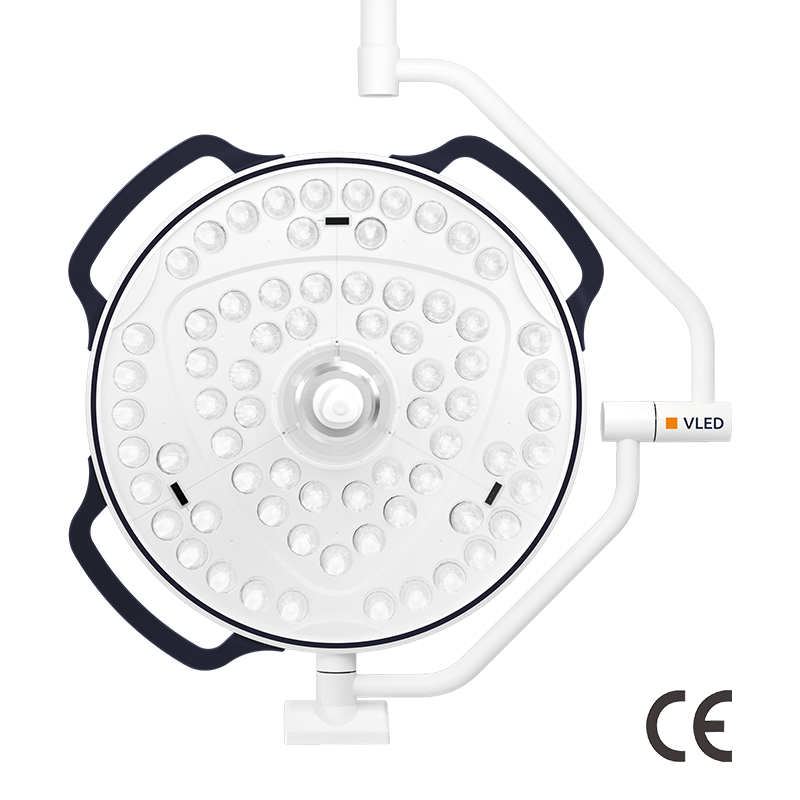
VG Medical VLED Series LED Surgical Light
Explore the surgical light range and the VLED 7500 model for detailed product specifications.
Operating Tables
Operating tables must accommodate different patient positions and surgical procedures. General surgery, orthopedic surgery, neurosurgery, and gynecology may require different positioning capabilities and accessories.
Key evaluation criteria include:
- Maximum safe working load and patient weight capacity.
- Table height adjustment and longitudinal movement.
- Trendelenburg and lateral tilt capabilities.
- Radiolucent tabletop sections for imaging applications.
- Compatible headrests, leg supports, arm boards, and other accessories.
- Battery operation and emergency positioning functions.
For instance, the VG Medical VCARE 5000/7000 Series features a modular tabletop and electro-hydraulic positioning system. Its published maximum safe working load is 480 kg for VCARE 5000 and 500 kg for VCARE 7000, depending on the model configuration.
Hospitals should compare these specifications against their actual surgical procedures and imaging requirements before finalizing a model.
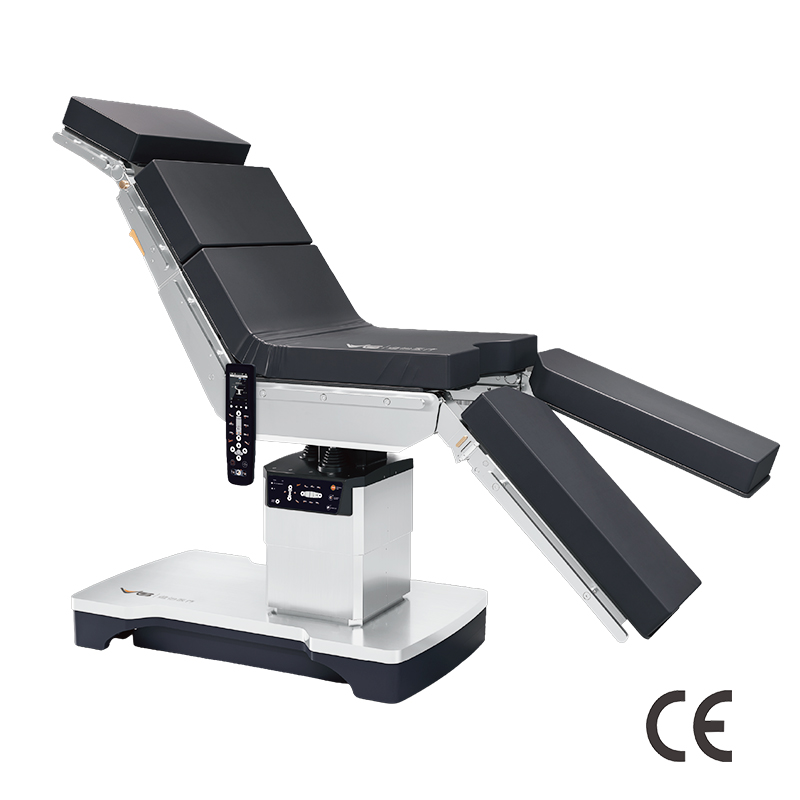
VG Medical VCARE 5000/7000 Electric Operating Table
View the operating table collection and VCARE 5000/7000 Series for further technical details.
Medical Ceiling Supply Units
Medical ceiling supply units, also called medical pendants, organize essential utilities and equipment connections around the surgical field. Depending on the configuration, they can provide access to medical gases, electrical outlets, communication interfaces, and equipment mounting rails.
When selecting a medical pendant, consider load capacity, arm movement, mounting structure, gas terminal configuration, electrical connections, cable management, and the number of devices required in each room.
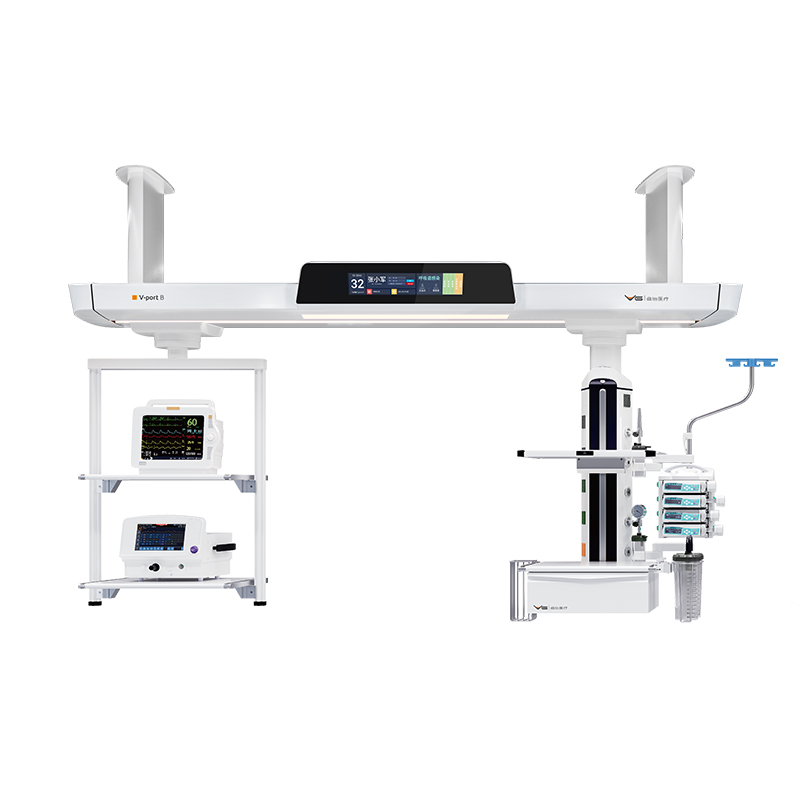
VG Medical V-PORT B Series Medical Supply Unit
The VG Medical V-PORT B Series uses a modular configuration for operating rooms and intensive care environments. Its product features include equipment docking rails, load-bearing support, and an oxygen leakage alarm.
Explore the medical ceiling pendant range and V-PORT B Series when planning utility distribution and equipment positioning.
Digital Integrated Operating Room Systems
A digital integrated operating room connects selected surgical devices, video sources, displays, and clinical information systems through a coordinated platform.
Depending on the configuration, the system may include:
- Centralized operating room control.
- Endoscopic and surgical camera video integration.
- Medical display and video routing systems.
- Surgical recording and live broadcasting.
- HIS and PACS information access.
- Teaching and remote consultation functions.
The main advantage is coordinated operation rather than simply adding more digital devices. However, hospitals should verify interface compatibility, network capacity, cybersecurity requirements, data permissions, and system redundancy before procurement.
VG Medical provides digital OR products including ORPILOT, TELEPILOT, MATRIX BLOCK, TELECART, and E-LEARNING. These solutions can be configured according to the hospital's integration and surgical workflow requirements.
See the digital integrated OR solutions for more information.
Determine the Essential ICU Equipment Configuration
ICU equipment planning should start with the number of beds, patient acuity levels, nursing model, and the clinical services provided by the hospital. A general ICU and a specialized cardiac or neurological ICU may require different configurations.
A typical ICU equipment plan should consider the following groups:
- Patient beds: Electric adjustment, patient positioning, side rails, safe working load, and compatibility with patient transfer equipment.
- Patient monitors: Monitoring of parameters such as ECG, SpO2, blood pressure, temperature, and respiratory rate according to clinical requirements.
- Respiratory support: Ventilators, oxygen delivery systems, and associated respiratory care equipment based on the ICU's service scope.
- Infusion equipment: Infusion pumps and syringe pumps for controlled medication delivery.
- Medical gas infrastructure: Oxygen, medical air, and vacuum connections designed according to applicable local requirements.
- Medical ceiling supply units: Organized access to equipment mounting, gas outlets, power, and other bedside connections.
- Nursing and emergency equipment: Resuscitation equipment, emergency carts, storage systems, and communication devices.
It is important to distinguish between room infrastructure and clinical devices. A medical pendant can organize utility outlets and support equipment mounting, but it does not replace ventilators, patient monitors, infusion pumps, or other life-support devices.
VG Medical's ICU-related product portfolio includes medical ceiling supply units, patient beds, positioning pads, dressing carts, first-aid carts, medical bed head units, and nursing-related equipment. Hospitals can review its ICU equipment solution when planning room infrastructure and bedside equipment arrangements.
Evaluate Room Layout and Equipment Compatibility Before Procurement
Even technically suitable equipment can create operational problems if it is not coordinated with the room design. This is particularly important for new hospitals, where equipment selection and building infrastructure are often developed simultaneously.
Hospital planners should coordinate the following elements before approving equipment specifications:
- Room dimensions: Confirm that equipment dimensions, movement ranges, and maintenance access fit the available space.
- Ceiling structure: Verify structural loading and mounting requirements for surgical lights and ceiling-mounted medical pendants.
- Medical gas outlets: Match gas types, outlet standards, locations, and quantities with the clinical equipment schedule.
- Electrical infrastructure: Check voltage, frequency, outlet types, grounding, circuit capacity, and emergency power arrangements.
- Data infrastructure: Plan network connections, display positions, video transmission, and hospital information system interfaces.
- Cleaning and infection control: Evaluate accessible surfaces, material durability, and compatibility with the hospital's approved cleaning and disinfection procedures.
- Maintenance access: Allow sufficient clearance for inspection, repair, component replacement, and equipment servicing.
For digital operating rooms, coordination should involve medical equipment engineers, architects, electrical engineers, IT teams, infection control personnel, and clinical representatives. This reduces the risk of costly modifications after equipment delivery.
Check Medical Device Certifications and Regulatory Compliance
Regulatory compliance should be evaluated before placing a purchase order, not after equipment arrives at the hospital.
The procurement team should request the relevant documents for each device and verify that they match the intended market, product model, and intended use.
Common standards and regulatory references include:
- ISO 13485: Quality management system requirements for medical device organizations.
- IEC 60601-1: General requirements for basic safety and essential performance of medical electrical equipment.
- IEC 60601-1-2: Electromagnetic compatibility requirements for medical electrical equipment.
- IEC 60601-2-41: Particular requirements for the basic safety and essential performance of surgical luminaires.
- IEC 60601-2-46: Particular requirements for the basic safety and essential performance of operating tables.
- EU MDR 2017/745: European Union medical device regulatory framework, where applicable.
Not every standard applies to every device. Hospitals should verify the applicable standards according to product classification, intended use, and destination-country regulations. They should also request valid certificates, declarations of conformity, product labels, technical files where applicable, and local registration documentation.
VG Medical reports ISO 13485 certification and MDR-related CE registrations for specified surgical lights and operating table models. Buyers should verify the current certificate scope and model coverage directly with the manufacturer before procurement.
Compare Suppliers Beyond the Initial Equipment Price
A complete hospital equipment solution should be evaluated based on its total lifecycle cost rather than the initial purchase price alone.
When comparing manufacturers and suppliers, consider these factors:
- Manufacturing experience: Review the supplier's experience in producing equipment for operating rooms and intensive care environments.
- Product portfolio: Check whether the supplier can provide coordinated equipment categories and technical documentation.
- Customization: Confirm whether dimensions, mounting structures, configurations, and accessories can be adapted to project requirements.
- Installation and commissioning: Clarify who is responsible for site installation, testing, and final acceptance.
- Clinical training: Confirm that operating personnel receive appropriate product and system training.
- After-sales support: Evaluate spare parts availability, warranty coverage, technical response times, and maintenance arrangements.
The World Health Organization's medical equipment lifecycle approach also emphasizes that procurement is only one stage of equipment management. Needs assessment, installation, training, operation, maintenance, and eventual replacement should all be included in the hospital's planning process.
For international hospital projects, supplier evaluation should also cover export experience, destination-market compliance, shipping arrangements, installation coordination, and long-term technical support.
Why Consider VG Medical for OR and ICU Equipment Projects?
VG Medical Technology has specialized in operating room and ICU equipment since 2003. Its product portfolio covers key operating room equipment categories, including surgical lights, operating tables, medical ceiling supply units, and digital integrated OR systems.
The company's product range includes:
- VLED and LUCKYSTAR surgical light series.
- VCARE and COMFORT operating table series.
- V-PORT medical ceiling supply and pendant systems.
- ORPILOT, TELEPILOT, and other digital OR solutions.
- Hospital beds and related medical equipment.
VG Medical also reports more than 20 years of manufacturing experience, over 85 independent patents, ISO 13485 quality management certification, and international project experience across more than 40 countries and regions.
For new hospital projects, its product portfolio provides a starting point for coordinating surgical room equipment, ceiling utility systems, and digital OR integration. The final scope should still be defined according to the hospital's clinical requirements, local regulations, and the responsibilities of other specialist equipment suppliers.
Learn more about VG Medical, its manufacturing capabilities, and its ICU solution portfolio.
Practical Checklist for New Hospital OR and ICU Equipment Procurement
Before finalizing a procurement contract, hospital project teams can use the following checklist to verify whether the equipment plan is complete.
| Checklist Item | Verification Requirement |
|---|---|
| Clinical needs | Surgical specialties, ICU capacity, and clinical workflows defined. |
| Equipment schedule | Models, quantities, accessories, and technical specifications confirmed. |
| Room design | Equipment dimensions, ceiling loads, and maintenance clearances checked. |
| Utility connections | Power, grounding, medical gases, and data interfaces coordinated. |
| Compliance | Applicable certificates and destination-market requirements verified. |
| System integration | Device compatibility, network requirements, and testing scope agreed. |
| Project delivery | Installation, commissioning, acceptance, and staff training scheduled. |
| Lifecycle support | Warranty, spare parts, maintenance, and technical support confirmed. |
Frequently Asked Questions About OR and ICU Equipment
1. What equipment is included in a complete OR and ICU equipment solution?
A complete solution depends on hospital size and clinical services. OR equipment typically includes surgical lights, operating tables, medical ceiling supply units, surgical accessories, and digital integration systems. ICU equipment commonly includes patient beds, patient monitors, ventilators, infusion pumps, medical gas infrastructure, and bedside utility systems.
2. What is the difference between OR equipment and ICU equipment?
OR equipment supports surgical procedures, including illumination, patient positioning, anesthesia access, and surgical imaging. ICU equipment supports continuous critical care, patient monitoring, respiratory support, medication delivery, and bedside nursing workflows.
3. How do hospitals determine the quantity of OR and ICU equipment?
Equipment quantities should be calculated according to the number of operating rooms and ICU beds, expected patient volume, clinical specialties, equipment utilization, backup requirements, and maintenance arrangements. Hospitals should also consider future expansion when preparing the procurement schedule.
4. Why are medical ceiling supply units important in OR and ICU design?
Medical ceiling supply units organize medical gas outlets, electrical connections, equipment mounting, and cable management. Their positioning helps improve equipment accessibility and reduce unnecessary floor-level obstructions. The configuration must match the intended clinical workflow and applicable installation standards.
5. What certifications should hospitals check when purchasing medical equipment?
Common references include ISO 13485 for medical device quality management, applicable IEC 60601 standards for medical electrical equipment, and EU MDR requirements for products marketed in the European Union. The exact requirements depend on the device type, classification, intended use, and destination market.
6. Can one manufacturer supply equipment for both OR and ICU departments?
Yes. Some manufacturers offer equipment portfolios covering both environments, particularly surgical lights, operating tables, medical ceiling supply units, patient beds, and digital integration systems. However, hospitals may still need specialist suppliers for ventilators, patient monitors, anesthesia machines, and other clinical devices outside the manufacturer's product scope.
7. What should be included in an OR and ICU equipment quotation?
A detailed quotation should identify product models, quantities, technical specifications, accessories, applicable certifications, delivery terms, warranty conditions, installation responsibilities, commissioning, training, and after-sales support. For integrated systems, it should also define interfaces, compatibility requirements, and acceptance testing procedures.
Plan Your Hospital Equipment Project with VG Medical
Selecting the right OR and ICU equipment is a long-term investment in clinical infrastructure, operational efficiency, and patient care. A successful project starts with clearly defined clinical requirements and continues through equipment selection, room coordination, installation, commissioning, and lifecycle support.
Whether you are developing a new hospital, expanding an operating department, or upgrading ICU infrastructure, VG Medical can help evaluate suitable surgical lights, operating tables, medical ceiling supply units, and digital integrated OR configurations.
Contact VG Medical to discuss your project requirements, request product specifications, and obtain a customized equipment proposal.