Choosing a medical pendant for an intensive care unit (ICU) is not quite the same as selecting one for an operating room (OR). Both environments need reliable access to medical gases, electrical power and clinical equipment, but their daily workflows, equipment combinations and space requirements can be very different. A pendant that works well beside an ICU bed may not provide the positioning flexibility or equipment support required during surgery.
For hospital planners, medical equipment distributors and healthcare project contractors, the right choice starts with understanding how each room is used. This guide explains the main differences between an ICU medical pendant and an operating room medical pendant, what to check before specifying a system, and how to match the configuration to the project.
1. Understand the Different Needs of ICU and OR
An ICU is designed for continuous patient monitoring, respiratory support and bedside care. Medical staff may need to access ventilators, patient monitors, infusion pumps and other devices throughout the day and night. The pendant should keep these connections organized while allowing caregivers to reach the patient from different sides.
An operating room has a different priority. Equipment must support surgical and anesthesia workflows, often involving several clinicians working around the operating table. The pendant may need to accommodate anesthesia equipment, monitors, shelves, drawers and medical gas outlets while allowing suitable movement around the surgical field.
These differences affect the choice of pendant structure, mounting position, load capacity, outlet layout and arm movement. Before comparing models, identify the clinical tasks and equipment that the system must support.
2. Key Differences Between ICU and OR Medical Pendants
| Selection Factor | ICU Medical Pendant | OR Medical Pendant |
|---|---|---|
| Main purpose | Continuous bedside care and monitoring | Surgical and anesthesia workflow support |
| Typical equipment | Monitors, ventilators, infusion pumps and accessories | Anesthesia machines, monitors, shelves and surgical support devices |
| Layout priorities | Bedside access and routine nursing tasks | Access around the operating table and surgical team movement |
| Configuration focus | Accessible outlets, organized devices and cable management | Equipment positioning, load capacity and coordinated gas and power connections |
| Project planning | Bed count, nursing access and monitoring requirements | Operating table position, anesthesia workflow and room integration |
These are general selection considerations, not fixed rules. Some ICUs require a high-capacity bridge system, while some operating rooms may use compact pendant configurations. The final design should follow the equipment list, clinical workflow and room layout rather than the room name alone.
3. Choose the Right Pendant Structure and Mounting Position
The mounting arrangement determines how equipment can be positioned and how much usable space remains around the patient. Ceiling-mounted systems can help reduce floor-level obstructions, but the ceiling structure, service access and equipment movement must be considered before installation.
For ICU projects, a single-arm or column arrangement may suit a defined bedside equipment group. A bridge-type system may be more appropriate where multiple beds or a larger collection of devices require organized access. The correct choice depends on the care model and the available ceiling space.
In an operating room, arm reach and rotation are especially important. The pendant must allow the clinical team to position equipment without obstructing the operating table, surgical lights or other ceiling-mounted devices. Check the full movement range during the design stage, not just the pendant's appearance in a product photograph.
For example, the V-PORT B Series bridge-type medical supply unit is designed for flexible configurations in operating rooms and intensive care settings.
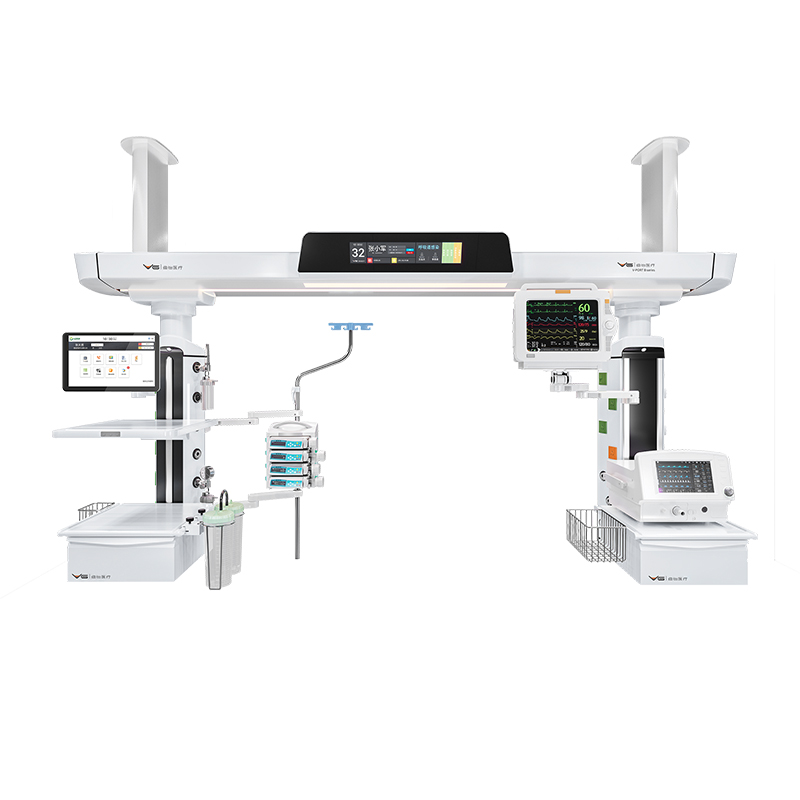
V-PORT B Series bridge-type medical supply unit
4. Check Medical Gas, Electrical and Data Connections
Medical gas and electrical connections should be specified according to the devices used in each room. ICU beds may require connections for respiratory support and monitoring equipment, while an OR pendant may need to support an anesthesia workstation and additional surgical equipment. The exact requirements vary by hospital, equipment model and local regulations.
Before confirming a configuration, prepare an outlet schedule that identifies:
- The type and number of medical gas outlets required.
- The quantity, location and electrical specifications of power outlets.
- Data or communication connections needed by monitoring and clinical systems.
- Required shelves, drawers, equipment rails and accessory holders.
- Any alarm, cable-management or equipment-integration requirements.
Do not assume that every pendant includes the same outlet arrangement as standard. Confirm connector standards, outlet identification, electrical compatibility and required certifications for the destination market. Medical gas systems and electrical installations should be designed and verified by qualified professionals.
5. Calculate Load Capacity and Equipment Space
A medical pendant must safely support the equipment attached to it. Add the weight of monitors, shelves, anesthesia devices, drawers and accessories before choosing a model. Consider future additions as well as the initial installation, and verify the manufacturer's rated load for each shelf, arm and column.
Load capacity is not the only concern. The equipment must remain accessible, and its placement should not create unnecessary reach, collision or cable-management problems. A layout that looks spacious on a drawing may become crowded once all devices are installed.
The V-PORT C Series medical supply unit offers modular configuration options for clinical environments. Its product information describes features such as equipment rails, cable management and an electromagnetic braking system. Buyers should confirm the exact model configuration, rated loads and compatibility with their intended equipment before ordering.
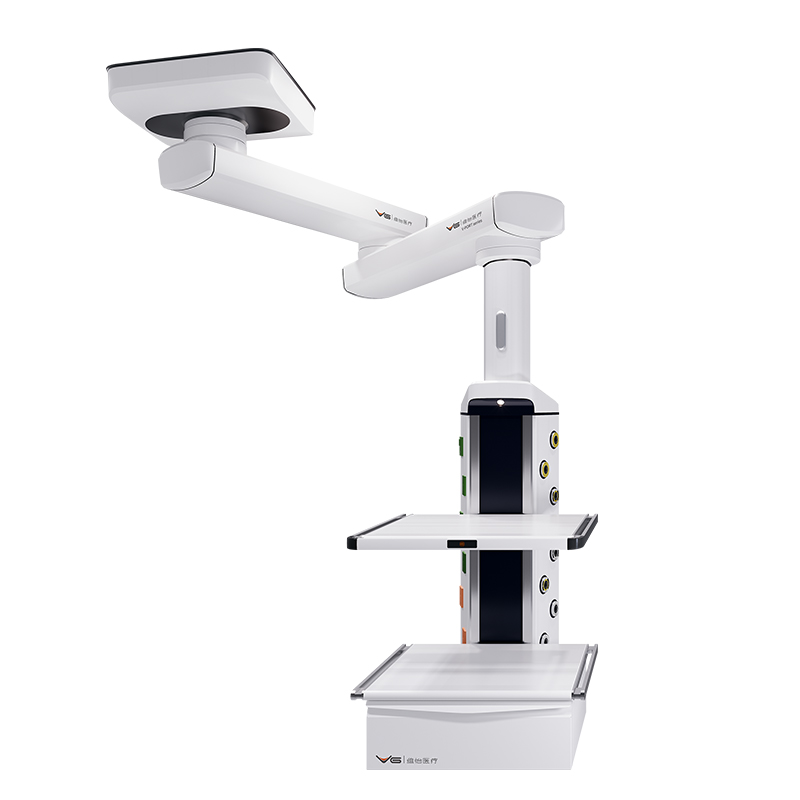
V-PORT C Series operating room medical pendant
6. Consider Cleaning, Maintenance and Daily Operation
Medical pendants are used in demanding clinical environments, so surface accessibility, cable organization and maintenance access deserve attention. Equipment should be arranged in a way that supports routine cleaning without creating unnecessary obstacles. Where infection-control procedures require specific cleaning agents, confirm that the materials and surfaces are compatible with the hospital's approved process.
Moving arms, brakes and adjustment mechanisms should be easy for authorized staff to operate and maintain. Ask the supplier about inspection intervals, spare parts availability, service access and after-sales support. For projects outside the manufacturer's home market, also confirm installation guidance, training arrangements and local service responsibilities.
For ICU installations, consider whether the arrangement supports access during routine bedside care and urgent interventions. For OR installations, check whether the pendant can be repositioned without interfering with surgical lights, anesthesia equipment or staff movement.
7. Plan for Room Integration Before Purchasing
A medical pendant should be selected as part of the room's infrastructure, not as an isolated piece of equipment. Coordinate the pendant layout with ceiling height, structural supports, medical gas pipelines, electrical services, lighting, ventilation and other ceiling-mounted systems.
For a new hospital or renovation project, provide the supplier with room drawings, a device list, the expected mounting positions and relevant technical requirements. This makes it easier to assess arm reach, clearance, service routing and potential interference before installation begins.
For projects that require a coordinated room solution, buyers can review ICU solution planning and the company's broader product range. VG Medical has focused on operating room and ICU equipment since 2003, with medical pendants among its product offerings. Visit the VG Medical to learn more about its manufacturing background and clinical equipment solutions.
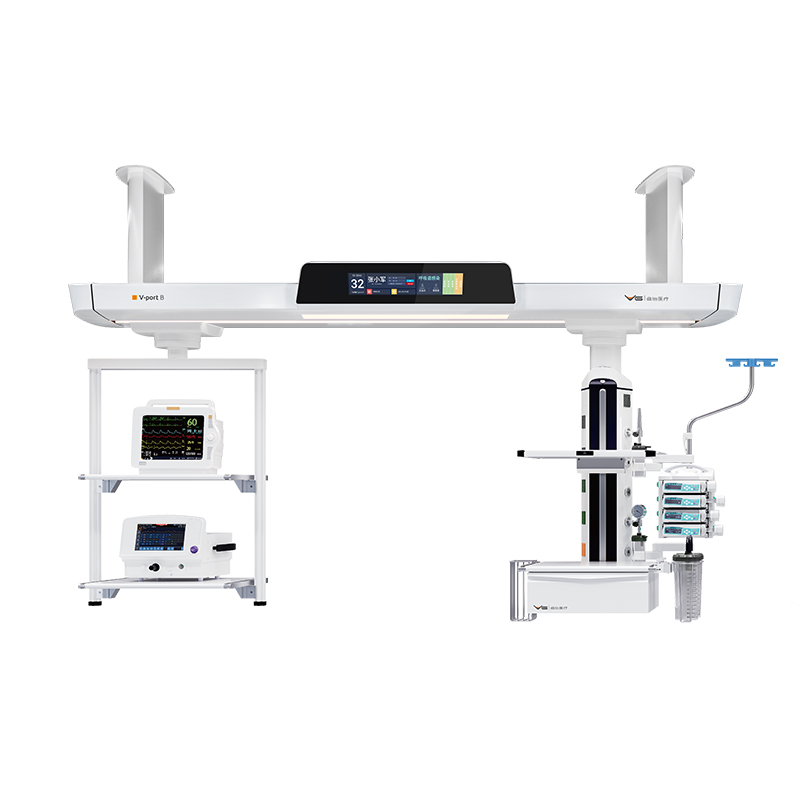
A bridge-style configuration for organized equipment access
8. Medical Pendant Selection Checklist
Before requesting a quotation, prepare a clear specification covering the following points:
- Clinical application: ICU, anesthesia, general surgery or a specialized OR.
- Mounting type: single arm, double arm, column or bridge configuration.
- Equipment list, total weight and required load capacity.
- Medical gas types, outlet quantities and local connector standards.
- Electrical power, data connections and accessory requirements.
- Required movement range, ceiling clearance and service access.
- Applicable standards, installation scope, warranty and after-sales support.
Providing these details helps suppliers recommend a configuration that matches the project rather than relying on a generic product description. For distributors and hospital contractors, it also makes quotations easier to compare on a like-for-like basis.
Frequently Asked Questions
1. What is the main difference between an ICU medical pendant and an OR medical pendant?
An ICU medical pendant generally supports bedside monitoring, respiratory care and nursing workflows. An OR medical pendant is configured around surgical and anesthesia equipment, with particular attention to equipment positioning and access around the operating table. The required configuration depends on the clinical workflow.
2. Can one medical pendant model be used in both ICU and OR environments?
Some product series offer configurations for both environments, but the same configuration may not suit every room. Buyers should verify the intended application, mounting arrangement, outlet layout, load rating and compliance requirements for the specific model.
3. What should I consider when choosing a ceiling-mounted medical pendant?
Check ceiling structure, mounting position, arm reach, rotation, equipment clearance, service routing and access for maintenance. The pendant should work with the room's lighting, ventilation and other ceiling-mounted equipment.
4. How do I determine the required load capacity?
List all devices, shelves, drawers and accessories that will be mounted on the pendant, then confirm the rated load for the complete system and each relevant component with the manufacturer. Include planned future equipment and follow the manufacturer's loading instructions.
5. Which connections should be specified for a medical pendant?
Specify the required medical gas outlets, electrical outlets, data connections and accessory interfaces based on the room's equipment list. Connector types, quantities and installation requirements should be confirmed against local standards and the hospital's technical specifications.
6. What information should I send to a medical pendant manufacturer for a quotation?
Share the room layout, intended application, equipment list, required mounting type, load estimates, gas and power requirements, destination market and project schedule. These details help the supplier assess configuration options and identify technical questions before quotation and installation.
Conclusion
The right medical pendant is the one that fits the clinical workflow, equipment load and room infrastructure. ICU projects often focus on bedside access and continuous monitoring, while OR projects place greater emphasis on anesthesia and surgical equipment positioning. A detailed equipment list, early coordination with the room design team and confirmation of technical requirements will help buyers make a more informed decision.
Explore medical ceiling supply units from VG Medical to compare available configurations for hospital projects, or contact the team to discuss your ICU or operating room requirements.